Wednesday, September 19, 2012

India’s cotton cloth: the once & future king

This is the abstract of my talk in Delhi at India International Centre planned for October 6:
India for at least 18 centuries was the acknowledged world leader in cotton textiles, making a breathtaking diversity of fabrics. With the entry of the British East India Company into production in the mid 19th century the chain of interdependence between cotton farmers and weavers was broken, losing with it the process of cotton textile production that had made India the world’s supplier of cotton cloth. 

The background of the talk is the history of  the traditional Indian cotton textile industry over millennia. Since Roman times cotton cloth from India had been exported to Europe. But for the first time in the early 19th century there were European interventions in production: Changes were introduced by the East India Company into both cotton textile making and cotton growing. Spinning was mechanized & centralized. Cotton had now to be grown for one standardized type of machine, in other words nature had to adapt to technology, rather than – as before - flexible technologies adapted to a huge diversity of cotton varieties.  The damaging effects of those changes on the environment and on the Indian cotton textile industry can be felt today.

The last part is the 20 year story of malkha, from the 1990s to the present. Malkha combines traditional and cutting edge technologies to suit a contemporary context, replacing the resource intensive process of industrial yarn making with a series of small-scale, village based, field-to-fabric production chains.

Friday, September 14, 2012

textiles of peace at National Archives

Should the Hindi version of 'Gandhiji & the Textiles of Peace' be Gandhiji aur Aman ki Chadariya which is what M K Raina has suggested, or Gandhiji aur Shanti ka Tanabana as the translation dept of National Archives has it? Your suggestions welcome.
Meanwhile the posters have already been printed with one, and the banners will be painted with the other.
Please note dates: October 2-11

Tuesday, September 11, 2012


While the massive & spreading protests at & around Kudankulam are being downplayed in the national media, and the Police are breaking into the locked homes of the protesters, destroying their few possessions, we could reflect on an earlier nuclear event, and its lasting impact 25 years on:

Today, the Chernobyl Nuclear Power Plant sits inside a fenced area known as the Exclusion Zone. Radioactive remnants of the failed reactor linger inside the so-called sarcophagus, a 24-story concrete and steel encasement hastily erected after the accident. Leaky and structurally unsound, it now threatens to collapse, shaking loose enough radiation to cause a second disaster of similar magnitude. Work has started on a new encasement, which will slide over the existing sarcophagus to seal in the remaining nuclear fuel - at an estimated cost of 2 billion dollars.
Less than 2 miles away from the reactor, the evacuated town of Pripyat, once inhabited by 50,000 plant workers, is a chilling ghost town still littered with the remnants of its hasty abandonment. Within the Exclusion Zone, in dozens of abandoned villages collapsed houses are disappearing under overgrowth. Ignoring radiation levels, some 400 elderly people have returned to their homes.
From the first day, officials downplayed the damages of the catastrophe and the politics of misinformation continues: A UN report estimates that 4,000 people will eventually succumb to cancer-related illnesses as the result of the accident. But major environmental organizations have accused the report of whitewashing Chernobyl's impact and state that more than 100,000 people have already died as a consequence of the disaster.
In the desperate search for alternative energy sources, it is important that we remember the Chernobyl accident as a possible outcome of nuclear power.
from The Huffington Post website

Friday, September 7, 2012

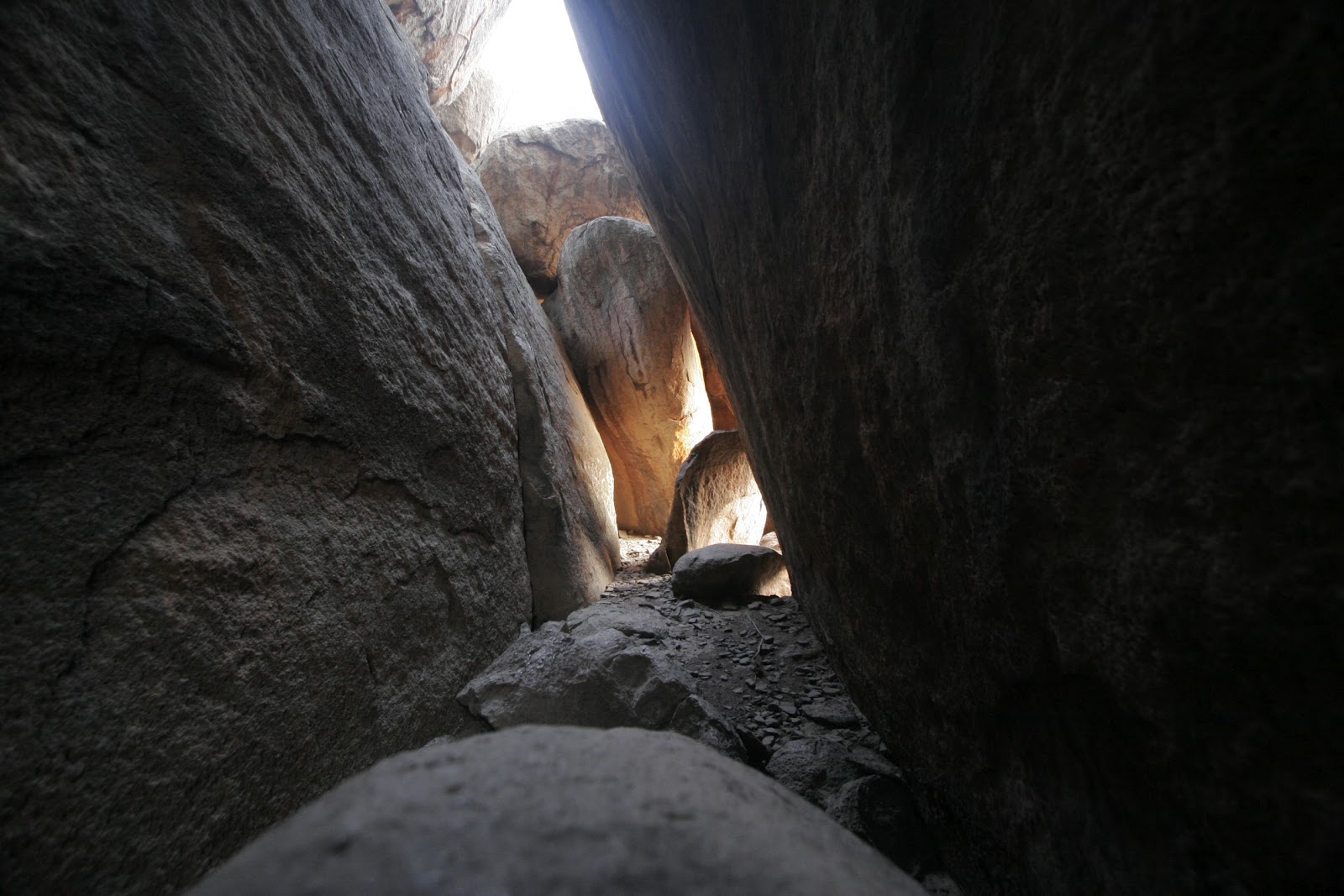
Deccan rockscape


The two and a half billion years old, majestic, irreplaceable Deccan rocks are so easily destroyed, wrecking the heritage Deccan landscape, so that a few people with money can make more money. On a par with the destruction of the South American rainforests using chainsaws, the rocks are now being mined with heavy machinery that cuts out cubes of 20 feet diameter in one go. One can just stand by and watch in anguish.

Kudos to Frauke Quader for her role as the leading light of the Save the Rocks Society. Pictures by Pradip Krishen.

Monday, September 3, 2012

Ashok Lunawat runs Vardhaman Enterprises in Bangalore, where he processes garments for export. He is going to help Malkha set up a fabric processing plant next year at a Common Facilities Centre at Sircilla, where we will also have a second dyeing unit. Ashok gave us some idea of the space and the two machines needed: a hydro extractor and a tumble drier. Fabric finishing will be a new area of research for us, as upto now it has been done for us in a small way by Sanjay Gulati of Modelama Exports.

Friday, August 31, 2012

Starting the Bangalore Bazaar on a cheery note: Sales were upto our usual first-day average, even at the out-of-the way venue. Some of the regular malkha customers took the time and trouble to trek 35 km out of the City Centre.

The malkha stall is no 115, inside the hall.

Monday, August 27, 2012

Last minute change: Venue of the Bangalore Nature Bazaar is now

E-Zone Club
23/24 Outer Ring Road
Chinnapanahalli
near Marathalli Bridge
Bangalore 500 037

This is because the Palace Grounds is no longer available for selling events. We understand that the new venue is near Whitefields, and that though it is far from the city centre there are many IT offices nearby...